


There is a quiet revolution happening on millions of phones around the world, and most people walking past you on the street have no idea it is underway. It is not loud. It does not trend on social media the way a new messaging app or a viral game does. But it is changing something far more fundamental than how we chat or scroll. It is changing how women understand their own bodies — month after month, phase after phase, hormone by hormone.
For most of human history, the menstrual cycle was treated as a vague, faintly embarrassing background process. Something to be endured, hidden, and rarely discussed in plain language. Generations of women grew up knowing their period would “come around” at some point, give or take a week, and that was the extent of the literacy on offer. Schools taught reproduction in clinical, fertility-focused terms but skipped the lived experience entirely. Doctors had ten minutes and a prescription pad. And so the cycle — arguably one of the most important vital signs a woman has — remained a mystery to the very person living inside it.
In 2026, that is finally changing. And artificial intelligence is the reason.
This is a feature about menstrual-cycle literacy: what the cycle actually is, why understanding it matters more than almost anyone tells you, and how a new generation of AI-powered tracking tools is quietly turning a once-opaque biological process into something women can read like a daily weather forecast for their own bodies. We will explain the science properly — the four phases, the hormones, the fertile window, the subtle physical signals your body sends if you know how to listen. We will look honestly at the femtech category, including the well-known apps you have probably heard of. And we will take a close, editorial look at where the smartest tools are heading, using the AI-native Period Tracker App called Vyve as a leading example of what cycle tracking is becoming.
A note before we begin: everything here is for education and general wellness. It is not medical advice, and nothing in this article should be used as a method of contraception or as a substitute for a conversation with a qualified healthcare professional. Your body is yours, your circumstances are unique, and a good app — no matter how clever — is a companion to your care, never a replacement for it.
With that said, let us begin where every honest conversation about cycles should begin: with the cycle itself.
A woman checking her wellness app by a sunny window
The Menstrual Cycle, Explained Properly
Ask ten women to describe their menstrual cycle and you will get ten different answers, most of which boil down to “my period comes roughly once a month.” That is true, but it is a little like describing a symphony as “some noise that happens for a while.” The reality is far richer, far more elegant, and far more useful to understand.
The menstrual cycle is not a single event. It is a recurring, roughly month-long sequence of hormonal shifts that prepares the body for a potential pregnancy and then, when that does not happen, resets and begins again. The cycle is conventionally measured from the first day of one period to the first day of the next. The textbook average is 28 days, but here is the first thing every woman should internalize: the “28-day cycle” is an average, not a rule. Perfectly healthy cycles can run anywhere from about 21 to 35 days, and they can vary from month to month. A cycle that is not exactly 28 days is not broken. It is simply a cycle.
Within that span, the body moves through four distinct phases, each governed by a particular cast of hormones rising and falling in a carefully choreographed sequence.
Phase One: Menstruation
The cycle is generally described as beginning on the first day of bleeding — day one. This is the menstrual phase, and it is the part everyone recognizes. The lining of the uterus, the endometrium, which had thickened in preparation for a possible pregnancy, is shed because no pregnancy occurred. This shedding is your period.
During menstruation, the two main reproductive hormones — estrogen and progesterone — are at their lowest. This hormonal low is one reason many women feel physically and emotionally flatter, more tired, or more inward-facing during their period. The bleeding itself typically lasts between three and seven days, and the volume and character vary enormously from woman to woman and even from cycle to cycle. Some women experience cramps (caused by the uterus contracting to expel its lining), others barely notice. Both can be entirely normal.
It is worth pausing on a cultural point here: because the period is the only visible, unmistakable part of the cycle, our entire society tends to treat the period as if it were the whole story. It is not. It is one act of four. The most interesting and arguably most influential parts of the cycle happen when there is no bleeding at all.
Phase Two: The Follicular Phase
Overlapping with menstruation and continuing after it, the follicular phase is where the body begins building toward ovulation. The brain’s pituitary gland releases follicle-stimulating hormone, known as FSH. As the name suggests, FSH stimulates the ovaries to develop several follicles, tiny fluid-filled sacs, each containing an immature egg. Usually, one of these follicles becomes dominant and continues to mature while the others recede.
As the dominant follicle grows, it produces increasing amounts of estrogen. This rising estrogen is one of the most consequential hormonal events of the month. Estrogen thickens the uterine lining again, preparing a fresh, hospitable environment in case a pregnancy occurs. But estrogen does much more than that. It affects mood, energy, skin, cognition, and even how the brain processes reward and motivation.
Many women report that the late follicular phase is when they feel their best: energetic, clear-headed, social, motivated, confident. There is a biological logic to this. Rising estrogen is associated with improved verbal fluency, better mood, and increased energy. If you have ever wondered why some weeks of the month you feel unstoppable and others you feel like hiding under a blanket, the answer is rarely random. It is usually the predictable rhythm of your hormones, and the follicular phase is often the high tide.
Phase Three: Ovulation
Ovulation is the main event — the moment the cycle has been building toward. When estrogen reaches a critical peak, it triggers a sharp surge of luteinizing hormone, or LH, from the pituitary gland. This LH surge is the trigger that causes the dominant follicle to rupture and release its mature egg. That release is ovulation.
The egg travels into the fallopian tube, where it can survive and be fertilized for roughly 12 to 24 hours. That short window is why understanding ovulation matters so much for anyone trying to conceive — and why understanding it also matters for anyone who is not.
Ovulation typically happens around the middle of the cycle, but “middle” is approximate and varies between women and between cycles. This is the single biggest reason that calendar-only period prediction is unreliable for pinpointing fertility: ovulation does not obey the calendar. It responds to hormones, and hormones respond to stress, sleep, illness, travel, and a hundred other variables. This is precisely where modern AI-driven tracking earns its keep, because algorithms can learn the subtle, personal patterns of when your body actually ovulates rather than assuming a textbook day 14.
Phase Four: The Luteal Phase
After ovulation, the ruptured follicle transforms into a temporary structure called the corpus luteum, which begins producing progesterone. Progesterone is the dominant hormone of the luteal phase, and its job is to maintain and stabilize the thickened uterine lining in case a fertilized egg arrives to implant.
Progesterone has a calming, slightly sedating quality for many women, but the luteal phase is also where premenstrual symptoms emerge. As the luteal phase progresses, if no pregnancy occurs, both progesterone and estrogen fall. This hormonal withdrawal in the days before menstruation is associated with the cluster of experiences commonly called PMS: mood changes, irritability, bloating, breast tenderness, food cravings, fatigue, and sleep disturbance. For a smaller group of women, these symptoms are severe enough to constitute premenstrual dysphoric disorder, or PMDD, a condition that deserves real medical attention rather than dismissal.
The luteal phase usually lasts a fairly consistent 12 to 14 days. Interestingly, the luteal phase tends to be more stable in length than the follicular phase. This is a useful fact: when a woman’s overall cycle length varies, it is most often the follicular phase — the run-up to ovulation — that stretches or shrinks, while the post-ovulation luteal phase stays relatively fixed. Good tracking algorithms exploit this stability to make smarter predictions.
When progesterone drops far enough, the uterine lining can no longer be maintained, it begins to shed, and bleeding starts. Day one arrives again. The symphony repeats.
The Body’s Quiet Signals: BBT, Cervical Mucus, and the Fertile Window
Here is something remarkable: your body broadcasts where you are in your cycle through physical signs that are surprisingly readable once you know what to look for. These signs are the foundation of what is sometimes called fertility awareness, and they are central to why cycle tracking has become so much more sophisticated than a circle drawn on a calendar.
The first signal is basal body temperature, or BBT — your body’s resting temperature when you first wake up, before you get out of bed. Progesterone is slightly thermogenic, meaning it raises body temperature. So after ovulation, when progesterone rises, BBT typically rises by a few tenths of a degree and stays elevated through the luteal phase. By charting BBT over time, you can identify, in retrospect, when ovulation likely occurred — the temperature shift confirms it happened. This is why BBT is so valuable: it is one of the few signs that actually confirms ovulation rather than merely predicting it.
The second signal is cervical mucus, which changes in texture and appearance across the cycle in response to estrogen. After your period, mucus is often scant or sticky. As estrogen rises toward ovulation, it becomes clearer, stretchier, and more slippery — frequently compared to raw egg white. This fertile-quality mucus helps sperm survive and travel, and its appearance is one of the body’s clearest signs that ovulation is approaching. After ovulation, under the influence of progesterone, mucus typically becomes thicker and drier again.
These two signals, tracked together, are the heart of the so-called symptothermal approach. They also reveal something crucial about fertility: the fertile window is wider than the egg’s brief 24-hour life. Because sperm can survive in fertile cervical mucus for up to about five days, the fertile window generally spans roughly five days before ovulation plus the day of ovulation itself. That is why anyone serious about understanding their fertility — to pursue pregnancy or to be aware of it — needs to think about a window, not a single day.
Understanding all of this used to require dedicated classes, paper charts, thermometers, and a fair amount of discipline. Today, a good app can absorb this information and turn it into clear, personalized insight. That shift — from manual charting to intelligent interpretation — is the story of femtech.
Why Women Historically Under-Tracked, and the Rise of Femtech
If the cycle is so important and so readable, why did so few women track it for so long? The answer is a tangle of culture, medicine, and technology, and it is worth understanding because it explains why the current moment feels like such a turning point.
For centuries, menstruation was shrouded in taboo. It was something to be concealed, not studied. Medical research, dominated by men and focused largely on male physiology, treated the female cycle as a complicating variable to be excluded from studies rather than a system worth understanding. Even today, the so-called gender data gap in medicine means many conditions that disproportionately affect women — endometriosis, PCOS, PMDD — are underfunded, underdiagnosed, and poorly understood. Endometriosis, for example, takes years on average to diagnose, a delay that is frankly indefensible for a condition affecting roughly one in ten women of reproductive age.
Against that backdrop, the tools available to ordinary women were primitive. A diary. A wall calendar with a discreet mark. Maybe a thermometer and a paper BBT chart for those trying to conceive. Tracking was tedious, easy to abandon, and offered little in return for the effort. Most women, understandably, did not bother. They under-tracked not out of carelessness but because the cost-to-benefit ratio was terrible.
Then smartphones arrived, and with them, the first wave of period apps. Suddenly logging a period took two taps. The friction collapsed. Within a few years, period tracking became one of the most popular categories of health app in the world, used by hundreds of millions of people. This was the birth of “femtech” — technology built specifically for women’s health — and period tracking was its flagship.
The first generation of these apps was useful but limited. Most worked like digital calendars: you entered your period dates, and the app averaged them to guess when the next one would come. Helpful, certainly. But these early apps did not really understand your body. They did not interpret your symptoms, learn your unique patterns, or explain what was happening hormonally. They predicted by arithmetic, not by insight. And their privacy practices, in many cases, were quietly alarming — a point we will return to in depth, because it matters enormously.
The femtech revolution since then has been about closing the gap between data and understanding. It is no longer enough to record that something happened. Women want to know what it means. They want to know why they feel exhausted on certain days, why their skin breaks out at a predictable point, why their motivation surges and crashes on a schedule, whether their symptoms are normal, and what they can actually do about any of it. Answering those questions requires more than a calendar. It requires intelligence. And that is exactly what artificial intelligence has brought to the table.
What Modern Cycle Tracking Actually Does, and Why It Matters
It is easy to assume that period tracking is only relevant to two groups: women trying to get pregnant and women trying to avoid it. That assumption sells the practice enormously short. Cycle tracking, done well, is one of the most broadly useful health habits a woman can build, and its benefits reach into corners of life that have nothing to do with reproduction. Let us walk through them honestly.
Trying to Conceive
For couples trying to conceive, understanding the fertile window is transformative. Because conception is only possible in that roughly six-day window around ovulation, and because ovulation timing varies, intelligent fertile-window detection can dramatically improve the odds in any given cycle. Modern apps combine cycle history, logged symptoms, BBT, and sometimes ovulation test results to forecast the fertile window with far more nuance than a simple calendar count. For many couples, this turns a frustrating guessing game into an informed, hopeful process. The best resources, including a thoughtful best period tracker guide, emphasize that the goal is to identify the days before and including ovulation, not to fixate on a single mythical “best day.”
Contraception Awareness — With a Clear and Honest Disclaimer
Some women use cycle and fertility awareness to understand when they are most and least likely to conceive. This is a legitimate area of knowledge, and understanding your fertile window is genuinely empowering. But here is the disclaimer, stated plainly and without hedging: a general-purpose period tracking app is not a contraceptive. Standard tracking apps are not regulated as birth control and should never be relied upon to prevent pregnancy. Fertility-awareness-based methods of contraception exist and can be effective, but only when taught properly, followed rigorously, and ideally used with a method specifically cleared for that purpose. If preventing pregnancy is your goal, talk to a healthcare provider about appropriate methods. An ordinary tracking app — including the ones discussed in this article — is for awareness and education, not contraception. Full stop.
PCOS, Endometriosis, and Chronic Conditions
For women living with conditions like polycystic ovary syndrome or endometriosis, tracking can be genuinely clinically useful. PCOS often involves irregular or absent ovulation, and a long-term record of cycle lengths, symptoms, and patterns can help a woman and her doctor recognize what is happening and respond. Endometriosis, characterized by debilitating pain and other symptoms, is notoriously slow to diagnose; a detailed symptom log that maps pain to cycle phase can be powerful evidence in a doctor’s office, helping to shorten that diagnostic odyssey. Tracking does not replace diagnosis, but it arms women with data, and data shifts the balance of a medical conversation in the patient’s favor.
Perimenopause
The years leading up to menopause — perimenopause — are marked by increasingly erratic cycles and a shifting symptom landscape that can be confusing and distressing. Tracking during this transition helps women see the bigger picture, anticipate changes, document symptoms for their doctors, and feel less blindsided by a phase of life that remains shockingly under-discussed. As cycles become irregular, having an intelligent record becomes more valuable, not less.
Mental Health, Mood, and Emotional Patterns
Perhaps the most underrated benefit of cycle tracking is its effect on mental health and self-understanding. When a woman can see that her low moods, anxiety spikes, or irritability cluster predictably in the late luteal phase, something shifts. The experience stops feeling like a personal failing or an inexplicable storm and starts feeling like a known, time-limited pattern. That reframing alone can be profoundly reassuring. For women with PMDD, this kind of tracking can be the first step toward getting properly diagnosed and treated. Understanding that “this feeling has a cause and an end date” is, for many women, genuinely liberating.
Energy, Productivity, and Cycle-Aware Living
Increasingly, women are using cycle awareness to work with their bodies rather than against them. Knowing that energy and confidence often peak in the follicular and ovulatory phases, and dip in the late luteal phase, lets women plan demanding tasks, social events, or big pushes for high-energy windows and schedule rest and lower-stakes work for the times their body wants to slow down. This is not about being ruled by hormones; it is about no longer being ambushed by them.
Training and Athletic Performance
Female athletes and active women are paying close attention to how cycle phases affect performance, recovery, and injury risk. Research in this area is still developing, but many women find real value in aligning training intensity with their cycle — pushing harder when energy and strength feel naturally higher and prioritizing recovery when their body signals it needs it. Cycle-aware training is one of the fastest-growing applications of all this knowledge.
The common thread across every one of these benefits is the same: tracking turns the invisible into the visible. And the better the tool’s intelligence, the more meaning it can extract from the data. Which brings us to the central question of 2026: what actually separates a great cycle tracker from a mediocre one?
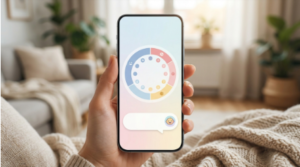
A modern period-tracking app with an AI coach on a smartphone
What Makes a Great Period and Ovulation Tracker in 2026
The app stores are crowded with cycle trackers, and they are not created equal. Many are little more than the digital calendars of a decade ago, dressed up in pastel gradients. A genuinely great tracker in 2026 does far more. If you are evaluating which app deserves a place on your phone — and a role in your understanding of your own body — here are the criteria that actually matter.
Prediction Accuracy
This is the foundation. A tracker’s core job is to predict your next period, your fertile window, and your ovulation day, and to do so accurately. The crucial distinction is between apps that predict by simple averaging and apps that learn your individual patterns over time. The best tools improve with use: the more cycles you log, the better they understand your specific rhythm, including the natural variability that makes your cycle yours. Beware any app that promises perfect, to-the-day predictions — bodies are not that precise, and honesty about uncertainty is a sign of a trustworthy tool.
Genuine AI, Not Just Buzzwords
“AI” is plastered on nearly everything now, so it pays to ask what it actually means in a given app. Real AI in cycle tracking shows up in a few concrete ways: adaptive predictions that learn from your data, pattern recognition that surfaces correlations you would never spot yourself, natural-language explanations that answer your questions in plain English, and personalized guidance that reflects your specific situation rather than generic boilerplate. The difference between an app that says “your period is due in three days” and one that can explain why you feel a certain way today, what is happening hormonally, and what might help — that difference is the difference between a calendar and a coach.
Ovulation and Fertile-Window Detection
Because ovulation timing is the linchpin of fertility, the quality of an app’s fertile-window detection is a critical differentiator. The best apps synthesize multiple inputs — cycle history, symptoms, BBT, cervical mucus observations, and ovulation test results where available — into a confident, well-reasoned forecast, and they are clear about how certain or uncertain that forecast is.
Symptom and Mood Logging
A tracker is only as smart as the data it has, and rich, easy symptom and mood logging is what feeds the intelligence. The best apps make logging fast and frictionless while capturing a meaningful range: flow, cramps, headaches, energy, sleep, skin, digestion, libido, mood, and more. Then — and this is the important part — they actually use that data to find patterns and offer insight, rather than just storing it in a void.
Privacy and Data Ownership
This belongs near the top of any 2026 evaluation, and we will devote a full section to it shortly. For now, the principle is simple: your reproductive health data is among the most sensitive information about you that exists, and a great app treats it that way. Look for clear, readable privacy policies, strong data protection, minimal data sharing, and a company whose business model does not depend on monetizing your most intimate information.
Design and Experience
An app you will actually use every day has to be a pleasure to open. Thoughtful design is not vanity; it is what sustains the daily habit that makes tracking work. Clean visuals, an intuitive layout, gentle and non-judgmental language, and a calm aesthetic all matter. A cluttered, confusing, or anxiety-inducing app is one you will abandon, and an abandoned app tracks nothing.
Cycle-Synced Nutrition and Lifestyle Guidance
The newest frontier — and one of the most exciting — is guidance that connects your cycle to how you eat, move, and live. A truly modern tracker does not just tell you what phase you are in; it helps you act on it, with phase-aware suggestions for nutrition, exercise, and self-care. This is where tracking crosses over from passive observation into active, supportive partnership, and it is one of the clearest signals of a forward-looking app.
With those criteria in mind, let us look at the landscape.
The Leading Apps, Fairly Assessed
No honest editorial feature would pretend that one app exists in a vacuum. The cycle-tracking category has several established names, each with genuine strengths, and women are well served by understanding the landscape before choosing.
Flo is the category’s giant, with an enormous user base and a polished, content-rich experience. It offers period and ovulation predictions, a vast library of health articles, and a friendly interface that has introduced millions of women to tracking. Its scale is both its strength and, for some users, a reason to scrutinize its data practices closely.
Clue is widely respected for its science-forward, gender-neutral, and notably restrained approach. It presents cycle data clearly, leans on research, and has earned a loyal following among users who want substance over decoration. Many people who care about a no-nonsense, evidence-based tone gravitate to Clue.
Natural Cycles occupies a distinct niche: it is cleared by regulators as a contraceptive method in some markets, built around BBT measurement and a careful algorithm. It is the right example to cite when explaining that fertility-awareness contraception is a real, regulated category — and a reminder that ordinary tracking apps are not in that category and should not be treated as if they were.
Ovia is particularly strong in the fertility and pregnancy space, with a family of apps spanning conception, pregnancy, and parenting. For women on a fertility journey, it offers a focused, supportive experience.
Each of these has earned its place, and any of them may be the right fit for a given person. But the category is not standing still, and the direction it is heading is unmistakable: toward genuine intelligence, deeper personalization, and a far more conversational, coaching-style relationship between woman and app. The early apps digitized the calendar. The current leaders added content and prediction. The next generation is adding understanding — an app that does not just record your cycle but explains it, talks to you about it, and helps you live well within it. That is precisely the territory the Vyve app has staked out, and it makes for an illuminating example of where things are going.
A Closer Look at Vyve: Cycle Tracking as an Intelligent Companion
Among the newer entrants reshaping expectations, Vyve stands out as a clear example of the AI-native direction the whole category is moving in. It is worth examining in some detail, not as a sales pitch but as a case study in what becomes possible when you build a cycle tracker around intelligence from the ground up rather than bolting AI onto an old calendar. The team behind it, accessible through the broader wellness resources at vyvecare, has built the experience around a simple conviction: women deserve not just data, but understanding.
The AI Cycle Coach
The centerpiece of Vyve is what it calls the AI Cycle Coach — an in-app AI assistant designed to explain your cycle and give personalized daily guidance in plain, human language. This is the feature that best captures the shift from calendar to coach. Instead of leaving you to interpret charts and predictions on your own, the Cycle Coach acts like a knowledgeable companion you can actually talk to.
Wondering why you feel drained today? The coach can connect it to where you are in your luteal phase and what your logged symptoms suggest. Curious whether the mood you are feeling is “normal”? It can put your experience in the context of your hormonal phase and your own history. Want to know what to expect over the next few days? It can walk you through your forecast and explain the reasoning behind it. The point is not to replace medical advice — it does not, and a responsible tool is careful to say so — but to make the daily, ordinary questions women have about their bodies answerable in the moment, in language anyone can understand. That conversational, explain-it-to-me quality is exactly what early period apps lacked, and it is what makes a modern tool feel less like a database and more like support.
Food and Nutrition: Cycle-Synced Eating
Vyve’s second standout feature tackles a question women increasingly ask: how should what I eat change across my cycle? Its Food and Nutrition feature is built around cycle-synced eating — the idea that different phases, with their different hormonal profiles, call for different nutritional emphases, and that small, informed adjustments can help you feel more balanced across the month.
In practice, this means phase-aware guidance on what to eat and why. During menstruation, when iron is lost through bleeding and energy tends to run low, the app can steer you toward iron-rich and warming, restorative foods. In the follicular phase, as estrogen rises and energy climbs, it can suggest fresh, light foods that support that upswing. Around ovulation, it can emphasize foods that support the body’s peak. And in the luteal phase, when cravings and PMS symptoms emerge, it can suggest complex carbohydrates, magnesium-rich foods, and choices that help steady mood and blood sugar. Crucially, these are AI suggestions tied to hormones rather than rigid rules — gentle, personalized nudges rather than a restrictive diet. This is the kind of feature that turns abstract cycle knowledge into something you can act on at the grocery store and the dinner table, and it reflects the cutting edge of what cycle-aware living looks like in 2026.
Cycle-syncing nutrition: a flat lay of healthy foods
AI Period and Ovulation Predictions
Underpinning everything are Vyve’s AI-driven period and ovulation predictions. Rather than averaging your last few cycles and calling it a day, the app’s intelligence learns your individual patterns over time, factoring in your logged symptoms and history to sharpen its forecasts. As anyone who has read a careful best period tracker comparison knows, this adaptive, learning approach is what separates genuinely modern prediction from the calendar arithmetic of a decade ago. The more you use it, the better it understands the particular rhythm of your body.
Fertile-Window Forecasting
For women who want to understand their fertility — whether they are trying to conceive or simply seeking body awareness — Vyve provides fertile-window forecasting that synthesizes multiple signals into a clear picture of the days when conception is most likely. As always, and as the app itself makes clear, this is a tool for awareness and education, not a contraceptive method.
Symptom and Mood Tracking
Feeding all of this intelligence is rich, low-friction symptom and mood tracking. Logging how you feel each day is quick and non-judgmental, and the data does not just sit there — it informs the predictions, powers the Cycle Coach’s insights, and helps surface the personal patterns that make tracking genuinely revealing. Over time, this is how the app comes to “know” you, and how you come to know yourself.
A Privacy-First Foundation
Perhaps most importantly given the moment we are in, Vyve is built around a privacy-first approach to women’s health data. In a category where some apps have treated intimate reproductive data carelessly, building privacy in from the start is both an ethical stance and a practical reassurance for users. We will discuss exactly why this matters so much in the next section, because it is not an abstract concern — it is one of the defining issues of femtech in 2026.
And these are far from the only features. Between the coach, the nutrition guidance, the predictions, the forecasting, the tracking, and many more smart capabilities woven throughout, the app illustrates a broader truth: the leading edge of cycle tracking is no longer about recording the past but about understanding the present and intelligently anticipating the future. For readers who want to explore the wider ecosystem of guidance and tools, the resources at vyvecare offer a fuller picture, and the app itself is available as a dedicated Period Tracker App for those who want to experience the AI-native approach directly.
Data Privacy in Femtech: Why “Privacy-First” Is Not a Marketing Slogan
We need to talk seriously about privacy, because in women’s health technology, it is not a side issue. It is arguably the issue.
Think for a moment about what a cycle-tracking app knows about you. It knows when you menstruate. It knows when you ovulate and when you are fertile. It may know when you are sexually active, when you are trying to conceive, when you experienced a pregnancy loss, when you are pregnant, or when you might be. It knows your moods, your symptoms, your most intimate physical patterns. There are very few datasets in existence as sensitive as a complete record of a woman’s reproductive life. And for years, far too many apps treated that data with a casualness bordering on negligence — sharing it with advertisers, data brokers, and third parties, often buried in privacy policies almost no one reads.
In the United States in particular, the legal landscape since the overturning of Roe v. Wade has thrown these concerns into sharp relief. In a country where reproductive choices have become subject to varying and sometimes hostile legal regimes, the prospect of reproductive health data being shared, sold, subpoenaed, or otherwise exposed is no longer hypothetical. Women have rightly become far more cautious about which apps they trust with this information, and many have asked a question that would have seemed paranoid a few years ago: could the data in my period app ever be used against me?
That fear is exactly why “privacy-first” has stopped being a marketing flourish and become a genuine requirement. A responsible cycle-tracking app in 2026 should, at minimum, collect only the data it truly needs, be transparent and readable about what it does with that data, avoid selling or sharing intimate information with advertisers and brokers, give users real control over their data including the ability to delete it, and ideally minimize what leaves your device at all. When an app like Vyve foregrounds a privacy-first approach to women’s health data, it is responding directly to this landscape — treating the sensitivity of the information not as an afterthought but as a design principle.
For any woman choosing a tracker, the practical advice is straightforward: read the privacy policy, or at least its summary. Ask who owns your data and whether it is sold or shared. Favor apps that are explicit and protective rather than vague and permissive. Your cycle data is yours. The right tool helps you understand it while keeping it firmly under your control, and you are entitled to demand nothing less.
A woman relaxing with a cup of tea, practicing self-care
Cycle Red Flags: When to See a Doctor
Tracking your cycle does more than build self-knowledge; it can also help you notice when something is genuinely off. While the cycle varies naturally and there is a wide range of normal, certain patterns warrant a conversation with a healthcare professional. This is the responsible heart of cycle literacy: knowing not just what is normal, but when to seek help. The following is general educational information, not a diagnosis, and any concern is always a valid reason to see a doctor.
Consider speaking with a healthcare provider if you experience any of the following:
Periods that are consistently very irregular, very infrequent, or absent. Occasional variation is normal, but cycles that are persistently unpredictable, regularly longer than about 35 days or shorter than about 21 days, or that stop for several months without an obvious explanation such as pregnancy, can signal conditions like PCOS, thyroid problems, or other hormonal issues worth investigating.
Very heavy bleeding. Soaking through a pad or tampon every hour for several consecutive hours, passing large clots, or bleeding that interferes with daily life is not something to simply endure. Heavy menstrual bleeding can have treatable causes and can also lead to anemia.
Severe pain. Period cramps are common, but pain that is debilitating, that does not respond to ordinary measures, or that disrupts your ability to function is not something you should be told to simply tolerate. Severe or worsening pain is one of the hallmark signs of endometriosis and other conditions, and it deserves real attention rather than dismissal.
Bleeding between periods or after sex. Spotting outside your normal period, or bleeding after intercourse, should be evaluated.
Bleeding after menopause. Any bleeding once you have gone through menopause should be checked promptly.
A sudden, marked change in your normal pattern. Because you are tracking, you have a baseline. If your cycle suddenly changes character in a significant and sustained way, that change is itself useful information to bring to a doctor.
Severe premenstrual mood symptoms. If the emotional symptoms before your period are severe enough to seriously disrupt your relationships, work, or wellbeing, this may be PMDD, which is real, recognized, and treatable. You do not have to white-knuckle through it.
One of the quiet powers of good tracking is that it gives you the records to make these conversations productive. Walking into a doctor’s office with months of clear, organized cycle and symptom data transforms a vague “I think something might be wrong” into a precise, evidence-backed discussion. It shifts the dynamic in your favor, and it can meaningfully shorten the path to answers.
How to Start Tracking: A Practical Guide
If all of this has convinced you to begin — or to track more seriously than you have been — here is a practical, low-pressure way to start. The goal is sustainable insight, not perfectionism.
Start with the basics and build up. On day one, simply begin logging the first day of your period. That single data point, recorded consistently, is the foundation of everything else. Once that habit is established, you can layer in more.
Log a little every day, not a lot occasionally. The magic of tracking comes from consistency. A few seconds each day — noting your mood, energy, any symptoms, your flow if you are bleeding — compounds into a rich picture over a couple of cycles. Daily logging is what lets an intelligent app learn your patterns, so make it a tiny, frictionless ritual rather than a chore.
Be patient through the first couple of cycles. Any learning algorithm, and any self-understanding, needs data to work with. Predictions and insights sharpen considerably after two or three cycles of consistent logging. Do not judge the experience by your first week.
Consider adding deeper signals if you want more. If you are trying to conceive or simply want maximum insight, you can take your basal body temperature each morning before getting out of bed, and observe changes in cervical mucus across your cycle. These signals add real precision, but they are optional — plenty of valuable insight comes from period dates, symptoms, and moods alone.
Use the app’s intelligence; ask it questions. If your app has an AI coach or insights feature, lean on it. Ask why you feel the way you do, what phase you are in, what to expect. The whole point of a modern tool is that you do not have to interpret everything yourself.
Let it inform your life gently. As patterns emerge, experiment with working alongside your cycle: planning demanding work for higher-energy phases, prioritizing rest and self-care in the late luteal phase, adjusting your eating across the month. The aim is not rigid rules but a more compassionate, informed relationship with your own rhythms.
Keep perspective. Tracking is a tool for awareness and wellbeing, not a source of anxiety. If logging ever starts to feel obsessive or stressful, step back. The purpose is to help you feel more at home in your body, never less.
Frequently Asked Questions
Is a 28-day cycle the only normal length? No. The 28-day cycle is a textbook average, not a universal rule. Cycles anywhere from roughly 21 to 35 days are generally considered within the normal range, and it is also normal for your cycle length to vary somewhat from month to month. What matters more than hitting an exact number is understanding your own typical range and noticing significant, sustained changes from it.
Can a period tracking app be used as birth control? No. A standard period tracking app — including the AI-powered ones discussed here — is not a contraceptive and should never be relied upon to prevent pregnancy. There is a separate, regulated category of fertility-awareness-based contraception, but ordinary tracking apps do not fall into it. If preventing pregnancy is your goal, please speak with a healthcare provider about appropriate, reliable methods.
How accurate are AI period and ovulation predictions? Modern AI-driven predictions are considerably more sophisticated than old calendar averaging, because they learn your individual patterns over time and factor in your logged symptoms and history. That said, no prediction is perfect, because bodies respond to stress, illness, travel, sleep, and countless other variables. The best apps are honest about this, improving with consistent use while being clear that forecasts are estimates, not guarantees.
What is the difference between the fertile window and ovulation day? Ovulation is the single moment an egg is released, and the egg survives for only about 12 to 24 hours. The fertile window is wider — generally about five days before ovulation plus the day of ovulation itself — because sperm can survive in fertile cervical mucus for up to roughly five days. This is why anyone thinking about fertility should focus on the window rather than fixating on one day.
What is cycle syncing, and is there anything to it? Cycle syncing is the practice of adjusting aspects of your life — particularly nutrition, exercise, and self-care — to align with your cycle phases and their differing hormonal profiles. Many women find real, practical value in eating and training in tune with their phases, such as favoring iron-rich foods during menstruation or scheduling intense workouts for higher-energy phases. It is best approached as gentle, personalized guidance rather than rigid rules, which is exactly how thoughtful AI suggestions tend to frame it.
Why do I feel so different at different points in my cycle? Because your hormones are genuinely changing throughout the month. Rising estrogen in the follicular phase is associated with higher energy, better mood, and more confidence for many women, while the drop in estrogen and progesterone before menstruation is linked to PMS symptoms like low mood, irritability, and fatigue. These shifts are real and largely predictable, which is precisely why tracking them can be so reassuring — your ups and downs usually have a name and a timeline.
Is it normal for my cycle to change month to month? Some variation is completely normal, and it is most often the follicular phase — the run-up to ovulation — that stretches or shrinks, while the post-ovulation luteal phase stays relatively consistent at around 12 to 14 days. However, sudden, dramatic, or persistent changes from your established pattern are worth discussing with a doctor, and your tracking records will make that conversation far more productive.
Can cycle tracking help with PCOS or endometriosis? Tracking does not diagnose or treat these conditions, but it can be genuinely valuable. A long-term record of irregular cycles can help reveal patterns consistent with PCOS, and a detailed log mapping pain and symptoms to your cycle can be powerful evidence when discussing possible endometriosis with a doctor. Given how long endometriosis often takes to diagnose, that documented evidence can meaningfully help.
Do I need to take my temperature every day to track properly? Not at all. Plenty of useful insight comes from simply logging your period dates, symptoms, and moods. Basal body temperature and cervical mucus observations add real precision — especially valuable if you are trying to conceive — but they are optional enhancements, not requirements. Start with the basics and add more only if you want deeper detail.
Is my data safe in a period tracking app? It depends entirely on the app, which is why this question matters so much. Reproductive health data is extraordinarily sensitive, and not all apps have handled it responsibly. Look for apps with clear, readable privacy policies, strong data protection, minimal sharing, and a genuine privacy-first commitment — and favor companies whose business model does not depend on monetizing your intimate information. You have every right to demand that your cycle data stays under your control.
Can men or partners benefit from understanding the cycle too? Absolutely. When partners understand the rhythms of the cycle — the energy shifts, the premenstrual symptoms, the fertile window — it can improve communication, empathy, and shared decisions about family planning. Cycle literacy is genuinely valuable knowledge for everyone, not only for the person menstruating.
What does an AI cycle coach actually do that a normal app doesn’t? A normal app records data and shows predictions. An AI cycle coach goes further by explaining things in plain, conversational language and offering personalized daily guidance. Instead of leaving you to interpret charts alone, it can answer questions like why you feel a certain way today, what is happening hormonally, what to expect next, and what small adjustments might help — turning the app from a passive log into an interactive companion. It is important to remember, though, that an AI coach offers education and wellness support, not medical advice.
At what age should someone start tracking? There is no single right answer, but many people benefit from tracking from their teenage years onward, once cycles begin, because it builds early body literacy and helps establish what is normal for them. Tracking remains valuable through the reproductive years and becomes especially useful during perimenopause, when cycles grow irregular and a clear record helps make sense of the transition.
Will tracking make me anxious about my body? For most women, tracking does the opposite — it replaces uncertainty and surprise with understanding and a sense of control. That said, if logging ever starts to feel obsessive or stressful for you personally, it is healthy to step back. The entire purpose is to help you feel more at home in your body, and any good tool should support your wellbeing rather than undermine it.
Conclusion: Knowing Your Body Is a Form of Power
For too long, the menstrual cycle was something that happened to women rather than something women understood. It was hidden behind taboo, neglected by research, and reduced in the popular imagination to a few days of bleeding and a vague monthly inconvenience. The cost of that ignorance was enormous: symptoms dismissed, conditions undiagnosed for years, and millions of women left to feel that their own bodies were unpredictable strangers.
What is happening now is, in the truest sense, a form of liberation through understanding. The cycle is not a mystery. It is an elegant, readable, four-phase rhythm driven by hormones we can name and signals we can learn to notice. And for the first time in history, women have tools intelligent enough to translate that complexity into clear, personal, daily insight — tools that do not just record the past but explain the present and thoughtfully anticipate what is coming.
Artificial intelligence is what made this leap possible. By learning individual patterns, surfacing connections no human would spot unaided, explaining the body in plain language, and offering guidance tailored to the person rather than the textbook, AI has quietly transformed cycle tracking from a digital calendar into something closer to a knowledgeable companion. The AI-native approach embodied by apps like Vyve — with its conversational Cycle Coach, its cycle-synced nutrition guidance, its learning predictions, and its serious commitment to privacy — points clearly toward where this whole field is heading: not more data for its own sake, but more understanding, more agency, and more care.
If there is one idea to carry away from all of this, it is that knowing your body is a quiet, durable form of power. It lets you plan your life with your energy instead of against it. It lets you walk into a doctor’s office with evidence instead of apology. It lets you recognize when something is wrong early enough to act, and to reassure yourself when something is simply your body doing what bodies do. And it lets you replace a lifetime of low-grade mystery with steady, compounding self-knowledge.
The technology will keep improving. The intelligence will keep deepening. But the heart of it is gloriously simple and entirely human: a woman, paying attention to her own remarkable body, finally equipped with tools worthy of the task. Whether you begin with a careful look at the options through a trusted best period tracker guide, explore the broader wellness resources gathered at vyvecare, or simply download a thoughtful Period Tracker App and start logging tomorrow morning, the most important step is the same: to begin paying attention. Your cycle has been speaking to you your whole life. In 2026, you finally have the means to truly listen.
This article is intended for general education and wellness purposes only. It is not medical advice, not a diagnosis, and not a method of contraception. Always consult a qualified healthcare professional for guidance about your individual health, fertility, contraception, and any symptoms or concerns.