

Introduction
Mental health plays a vital role in how people think, feel, and function in daily life. As awareness grows, many individuals seek clarity around the mental health definition, the role of a mental health counselor, and when a mental health hotline becomes necessary. Understanding these elements together helps people recognize when support is needed and where to find it without fear or confusion.
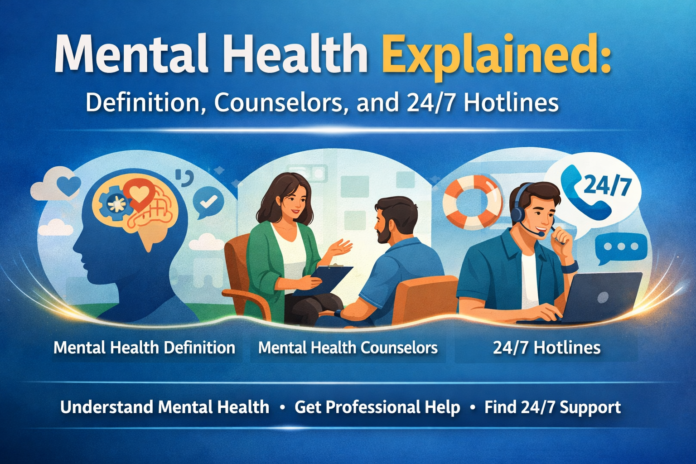
This article explains mental health in depth, explores professional counseling, and highlights how 24/7 hotlines serve as immediate lifelines during emotional crises.
Mental Health Definition and Its Importance
Mental health is more than the absence of mental illness. The mental health definition includes emotional, psychological, and social well-being, influencing how individuals cope with stress, relate to others, and make decisions. A strong understanding of mental health helps reduce stigma and encourages early intervention before challenges escalate.
The mental health definition has evolved over time. Today, it emphasizes balance, resilience, and the ability to manage life’s demands. Mental health affects productivity, relationships, physical health, and overall life satisfaction. When mental health is neglected, even small stressors can feel overwhelming.
Mental health conditions do not discriminate by age, gender, or background. Anyone can experience difficulties, which is why understanding the mental health definition is essential for both prevention and treatment.
What Is Mental Health?
Mental health refers to a state of well-being in which individuals realize their abilities, cope with normal stresses, work productively, and contribute to their communities. This mental health definition highlights functionality rather than perfection.
Mental health exists on a spectrum. People may experience periods of emotional strength as well as times of vulnerability. Recognizing shifts in mental health allows individuals to seek support early, whether from a mental health counselor or a mental health hotline.
Why Mental Health Matters in Daily Life
Mental health impacts how people handle pressure, communicate, and maintain relationships. When mental health is stable, challenges feel manageable. When it declines, everyday tasks may feel exhausting or impossible.
Ignoring mental health concerns can lead to long-term emotional distress, physical symptoms, and strained relationships. Understanding the mental health definition encourages proactive care instead of crisis-based responses.
Mental Health Definition
Mental health is a person’s emotional, psychological, and social well-being. It affects how people think, feel, act, handle stress, and make choices throughout life.
• Mental health influences behavior and emotions
• Mental health changes over time
• Mental health support improves quality of life
Common Mental Health Challenges People Face
Mental health challenges range from mild stress to severe emotional distress. Anxiety, depression, trauma, and burnout are among the most common experiences affecting mental health worldwide. These challenges often develop gradually and may go unnoticed until symptoms interfere with daily life.
Many people delay seeking help due to stigma or uncertainty. Understanding the mental health definition helps normalize these experiences and emphasizes that support is available through a mental health counselor or a mental health hotline.
Early recognition is critical. When symptoms are addressed early, recovery becomes more achievable and sustainable.
Understanding Mental Health Counselors
A mental health counselor is a trained professional who helps individuals manage emotional difficulties, behavioral issues, and mental health conditions. Mental health counselors use evidence-based techniques to guide individuals toward healthier thought patterns and coping strategies.
Working with a mental health counselor provides a structured, confidential environment where individuals can explore feelings without judgment. Mental health counselors support clients dealing with anxiety, depression, grief, trauma, and relationship challenges.
Mental health counseling is not only for crises. Many people work with a mental health counselor to improve self-awareness, emotional regulation, and life satisfaction.
What Does a Mental Health Counselor Do?
A mental health counselor assesses emotional concerns, provides therapeutic interventions, and helps clients develop coping skills. Through regular sessions, a mental health counselor supports long-term mental wellness and personal growth.
Mental health counselors tailor treatment plans to individual needs. Sessions may focus on stress management, emotional expression, behavioral changes, or trauma recovery.
Types of Mental Health Counselors
Mental health counselors specialize in different areas, including individual therapy, family counseling, substance use treatment, and trauma care. Each mental health counselor brings unique expertise based on training and experience.
Choosing the right mental health counselor depends on personal needs, comfort level, and the nature of the mental health challenge.
Mental Health Counselor
A mental health counselor is a licensed professional who helps people manage emotional, behavioral, and psychological challenges through therapy and guidance.
• Provides emotional support
• Helps develop coping strategies
• Offers confidential counseling sessions
When Should You See a Mental Health Counselor?
Seeing a mental health counselor is recommended when emotional distress interferes with daily functioning. Persistent sadness, anxiety, mood changes, or difficulty coping with stress are common signs that professional support may help.
Many people wait too long before contacting a mental health counselor, believing they should handle issues alone. Early counseling often prevents symptoms from worsening and reduces the need for crisis intervention through a mental health hotline.
Mental health counseling also supports personal growth, even when no formal diagnosis is present.
Benefits of Working With a Mental Health Counselor
Working with a mental health counselor provides clarity, emotional relief, and practical tools for managing challenges. Counseling strengthens emotional resilience and improves communication skills.
A mental health counselor offers unbiased support and professional insight, helping individuals process emotions safely. Over time, counseling fosters confidence, self-understanding, and healthier relationships.
Mental health counselors often collaborate with other support systems, ensuring comprehensive care when needed.
Mental Health Hotlines and Crisis Support
A mental health hotline provides immediate emotional support during moments of crisis. Mental health hotlines operate 24/7, offering confidential conversations with trained responders who listen without judgment.
Mental health hotlines are especially valuable when individuals feel overwhelmed, unsafe, or unable to access immediate in-person care. Calling a mental health hotline does not require a diagnosis or prior counseling experience.
These services bridge the gap between emotional distress and professional care, offering reassurance and guidance in critical moments.
What Is a Mental Health Hotline?
A mental health hotline is a phone-based support service available around the clock. It connects individuals with trained listeners who provide emotional support, crisis de-escalation, and referrals to local resources.
Mental health hotlines are free, confidential, and accessible to anyone experiencing emotional distress.
When to Call a 24/7 Mental Health Hotline
Calling a mental health hotline is appropriate when someone feels overwhelmed, hopeless, or at risk of harm. Mental health hotlines are designed for immediate support, not long-term therapy.
People often call a mental health hotline during moments of panic, intense anxiety, or emotional breakdowns when waiting for counseling is not an option.
Mental Health Hotline
A mental health hotline is a 24/7 phone service offering immediate emotional support during mental health crises or moments of distress.
• Available anytime
• Confidential and free
• Provides immediate emotional support
What to Expect When You Call a Mental Health Hotline
When calling a mental health hotline, individuals speak with trained responders who listen carefully and provide reassurance. Conversations are confidential, supportive, and focused on helping callers feel safe and understood.
Mental health hotline responders may ask gentle questions to understand the situation and suggest calming strategies. They may also recommend contacting a mental health counselor for ongoing support.
Calling a mental health hotline does not result in forced action unless there is immediate danger. The goal is support, not judgment.
How Mental Health Hotlines Provide Immediate Support
Mental health hotlines offer real-time emotional stabilization. Responders use active listening, empathy, and crisis intervention techniques to reduce distress.
Mental health hotlines also provide referrals to mental health counselors, community resources, and emergency services when necessary. This ensures continuity of care beyond the immediate crisis.
Mental Health Counselor vs. Mental Health Hotline
A mental health counselor and a mental health hotline serve different but complementary roles. A mental health counselor focuses on long-term treatment and personal growth, while a mental health hotline addresses immediate emotional distress.
Mental health hotlines are ideal during crises, while mental health counselors support sustained mental wellness. Many individuals benefit from using both services at different times.
Combining Counseling and Hotline Support for Ongoing Care
Mental health care is most effective when support options are combined. Mental health hotlines provide immediate relief, while mental health counselors offer structured, ongoing therapy.
Using a mental health hotline during moments of distress can prevent emotional escalation until counseling sessions resume. Together, these services create a comprehensive mental health support system.
Comparison Table: Mental Health Counselor vs Mental Health Hotline
| Aspect | Mental Health Counselor | Mental Health Hotline |
|---|---|---|
| Availability | Scheduled sessions | 24/7 access |
| Purpose | Long-term mental health care | Immediate crisis support |
| Format | Ongoing therapy | Phone-based emotional support |
| Focus | Treatment and growth | Crisis stabilization |
Getting Help and Taking the First Step
Seeking help is a sign of strength, not weakness. Understanding the mental health definition empowers individuals to recognize when support is needed. Whether reaching out to a mental health counselor or calling a mental health hotline, taking the first step can change lives.
Mental health support is more accessible than ever. With professional counselors and 24/7 hotlines available, no one has to face emotional struggles alone.
Read More:- Mental Health Quotes, Simple Tips, and Lessons We Love from Ellie Mental Health